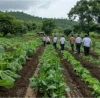

The term “organic farming” appears on food labels and restaurant menus everywhere, but what does it actually mean? At One Day Farmer, we practice organic farming methods across our 15-acre property, and visitors often tell us that seeing these practices firsthand transforms their understanding of sustainable agriculture. This article takes you through our organic farming journey from seed to harvest.
What Is Organic Farming?
Organic farming is an agricultural approach that works with natural systems rather than against them. Instead of synthetic pesticides, chemical fertilizers, and genetically modified seeds, organic farmers rely on natural processes, biological pest control, crop rotation, and organic matter to maintain soil health and grow crops.
The philosophy behind organic farming is simple: healthy soil produces healthy plants, which produce healthy food for healthy people. It’s a holistic approach that considers the entire ecosystem, not just crop yield.
Why We Chose Organic Methods
When we established One Day Farmer, we faced a choice: pursue high-yield conventional farming or commit to organic methods. We chose organic for several compelling reasons.
First, sustainability. Chemical-dependent farming degrades soil over time, requiring ever-increasing inputs. Organic methods build soil health with each season, creating a truly sustainable system.
Second, visitor health and safety. With families and children visiting our farm daily, we couldn’t risk exposure to harmful chemicals. Our organic approach means visitors can pick and eat produce directly from plants without worry.
Third, environmental responsibility. Our farm exists within a larger ecosystem. Chemical runoff affects groundwater, local wildlife, and neighboring areas. Organic farming minimizes environmental impact.
Finally, authenticity. We wanted to showcase farming methods that visitors could potentially replicate in their own gardens, not industrial techniques requiring specialized equipment and chemicals.
The Organic Soil Health Foundation
Everything in organic farming begins with soil. Healthy soil teems with life—bacteria, fungi, earthworms, and countless microorganisms that break down organic matter, fix nitrogen, and make nutrients available to plants.
Our Composting System
We maintain large-scale composting operations where crop residues, animal manure, kitchen waste, and plant material decompose into rich, dark compost. This process takes 3-4 months and produces the best natural fertilizer available.
Visitors often participate in our composting activities, learning to balance “green” nitrogen-rich materials with “brown” carbon-rich materials, maintain proper moisture, and turn compost piles for optimal decomposition.
Crop Rotation and Cover Cropping
We never grow the same crop in the same location consecutively. Different plants have different nutrient requirements and attract different pests. Rotation breaks pest cycles and prevents soil nutrient depletion.
During fallow periods, we plant cover crops like legumes that fix atmospheric nitrogen into the soil. These “green manures” are then tilled back into the soil, enriching it naturally.
Mulching and Soil Protection
We heavily mulch around plants with straw, leaves, or crop residues. Mulch suppresses weeds, retains soil moisture, moderates soil temperature, and gradually decomposes to add organic matter.
Organic Pest Management
One of the biggest misconceptions about organic farming is that we simply let pests run wild. Nothing could be further from the truth. We employ sophisticated pest management strategies—just without synthetic chemicals.
Beneficial Insects
We cultivate populations of beneficial insects that prey on pests. Ladybugs eat aphids. Praying mantises hunt various crop pests. Parasitic wasps lay eggs in pest larvae. By providing habitat and avoiding pesticides that would kill these allies, we harness natural pest control.
Companion Planting
Certain plants, when grown together, protect each other. Marigolds repel many insects and are planted throughout our vegetable gardens. Basil near tomatoes improves growth and flavor while deterring pests. Garlic and onions have natural antifungal properties.
Physical Barriers
Netting protects crops from birds. Row covers keep insects off vulnerable seedlings. Mulch barriers prevent soil-borne diseases from splashing onto plants during rain.
Organic Sprays
When necessary, we use organic-approved sprays like neem oil, garlic spray, or soap solutions. These break down quickly and leave no harmful residues.
Diversity as Defense
Unlike monoculture farms where one pest can devastate entire crops, our diverse plantings mean pest problems remain localized. We grow dozens of crop varieties simultaneously, so no single pest issue threatens our entire operation.
Water Management
Organic farming principles extend to water use. We’ve implemented several water conservation techniques that visitors find fascinating.
Drip Irrigation
We use drip irrigation systems that deliver water directly to plant roots, minimizing waste through evaporation. This method uses 30-50% less water than traditional irrigation.
Rainwater Harvesting
Large tanks collect rainwater from our structures during monsoon season. This stored water supplements our needs during drier months, reducing groundwater dependence.
Soil Moisture Retention
Our high-organic-matter soils act like sponges, holding moisture longer than depleted conventional soils. Combined with mulching, our water requirements are significantly lower than chemical farms.
Seed Selection and Plant Propagation
We prioritize heirloom and open-pollinated seed varieties over hybrids. These traditional varieties may not have the uniformity of modern hybrids, but they offer superior flavor, genetic diversity, and the ability to save seeds for future planting.
Our seed-saving program teaches visitors how to harvest, dry, and store seeds. Many families leave with seed packets to start their own gardens using plants they harvested at our farm.
We also maintain a nursery where we propagate plants through cuttings and divisions, demonstrating cost-effective ways to expand gardens without constantly buying new plants.
Seasonal Organic Cycles
Organic farming is intimately connected to seasons. We work with natural cycles rather than trying to force production year-round.
Monsoon Season (June-September)
This is rice planting season. The natural rainfall provides irrigation, and we grow monsoon vegetables like okra, bottle gourd, and ridge gourd. Visitors during this season experience the intense green of monsoon agriculture.
Post-Monsoon (October-November)
Harvest of monsoon crops and preparation for winter planting. We incorporate crop residues back into soil and plant winter vegetables.
Winter Season (December-February)
Peak season for cool-weather crops—cabbage, cauliflower, carrots, beets, lettuce, peas. This is our busiest harvest period, and visitors enjoy maximum variety of vegetables.
Summer (March-May)
Heat-loving crops thrive—tomatoes, peppers, melons, cucumbers. We focus on moisture conservation and heat management. Summer fruits like mangoes ripen during this period.
The Harvest
Harvest at an organic farm is a celebration. Without chemical ripening agents, our produce ripens naturally, often while still on the plant. This results in superior flavor—tomatoes that taste like tomatoes, not like the water-filled conventional varieties.
We teach visitors to identify ripe produce, harvest correctly without damaging plants, and handle fresh vegetables properly. Many first-time visitors are amazed by how much better farm-fresh organic produce tastes compared to store-bought alternatives.
From Farm to Table
Our farm-to-table meals showcase organic produce at its best. Vegetables harvested in the morning appear on lunch plates the same day. The nutritional difference is significant—many vitamins degrade rapidly after harvest, so fresher means more nutritious.
We’re transparent about our methods. Visitors see the entire cycle: compost piles feeding soil, soil nourishing plants, plants providing food, and food waste returning to compost piles. It’s a beautiful closed loop.
Challenges of Organic Farming
We’re honest with visitors about organic farming’s challenges. Yields can be lower, especially during the transition period from conventional to organic methods. Organic certification requires patience and documentation. Labor requirements are often higher since we can’t rely on chemical quick-fixes.
However, these challenges are offset by benefits: soil that improves over time rather than degrading, production costs that decrease as soil health increases, premium prices for organic produce, and the satisfaction of farming in harmony with nature.
Can You Do This at Home?
Absolutely. The principles we follow at One Day Farmer scale down beautifully for home gardens. Start with composting kitchen waste. Choose organic seeds or seedlings. Build healthy soil before worrying about plants. Accept some pest damage as part of the natural process. Grow diverse plants instead of monocultures.
Many of our regular visitors have started successful home organic gardens after learning techniques at our farm. We offer ongoing advice and support for these home gardeners, creating a community of organic farming advocates.
The Bigger Picture
Organic farming isn’t just about producing food without chemicals. It’s about rebuilding our relationship with the land, recognizing that soil is a living ecosystem, understanding that quick fixes have long-term costs, and accepting that working with nature produces better results than fighting against it.
Every organic farm, whether 15 acres like ours or a balcony container garden, represents a vote for sustainability, a commitment to health, and a investment in the future.
Conclusion
From seed selection to harvest celebration, organic farming is a journey of working with natural systems. At One Day Farmer, we’re privileged to share this journey with thousands of visitors annually, watching as understanding dawns and appreciation grows.
If you’ve never seen organic farming in action, we invite you to visit. Touch the living soil. Taste vegetables at peak ripeness. See beneficial insects at work. Experience firsthand why organic farming isn’t just an agricultural method—it’s a philosophy of respect for the earth that sustains us.
The future of farming must be sustainable, and organic methods show us the path forward. Join us at One Day Farmer to discover this future.
Interested in learning organic farming hands-on? Book your visit or sign up for our organic farming workshop at One Day Farmer!